KING acknowledges 10 radical sportsmen who scored in their struggles for change. By Ben Detrick
 10) Pat Tillman
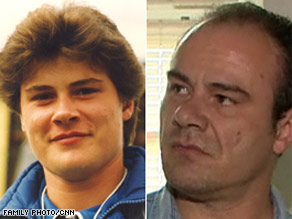
Inspired to serve his country after the Twin Towers tumbled, Pat Tillman left behind a respectable football career as a safety on the Phoenix Cardinals to join the hardbody Army Rangers. Tragically, on April 22, 2004, when Tillman was gunned down on patrol in Afghanistan, he became the first professional football player to die in combat since the Buffalo Bills’ Bob Kalsu was killed in Vietnam in 1970. Although Pat was quickly deified by pro-war zealots and the flag-waving NFL as a hero who had made the ultimate sacrifice, few knew the real story of his battlefield demise; originally reported as a casualty of an ambush from hostile forces, it later emerged that the Army had covered up the fact that Tillman was killed by “friendly fire” in a case of mistaken identity. “They realized that their recruiting efforts were going to go to hell in a handbasket if the truth about his death got out,” said his enraged father, Patrick Tillman Sr. “They blew up their poster boy.” The drama gets deeper—according to fellow troops, Tillman despised President Bush, planned on meeting anti-war writer Noam Chomsky and described the Iraq invasion as “so fucking illegal.”
———————————————————————————– 9) Curt Flood
Every contemporary athlete with a 12-car garage and diamonds worth the GNP of Honduras dangling from their neck should take a moment to profusely thank Curt Flood. A three-time All-Star and seven-time Gold Glove centerfielder as a member of the St. Louis Cardinals, Flood challenged baseball’s “reserve clause,” a standard contractual handcuff that bound players indefinitely to the team owning their contract, after refusing to accept a trade sending him to Philadelphia following the 1969 season. Objecting both to Philly (he considered it a racist-ass town) and to being treated like property, he went after baseball’s antitrust statutes in the Supreme Court case Flood v. Kuhn. Though Flood lost the decision, it put into motion the processes that eventually led to the creation of modern free agency. Financially strapped from legal fees and his career finished, Flood effectively martyred himself so that future generations of athletes could describe $50 million contracts as inadequate for feeding their kids. “I’m a child of the sixties, I’m a man of the sixties,” Flood explained before succumbing to throat cancer in 1997. “To think that merely because I was a professional baseball player, I could ignore what was going on outside the walls of Busch Stadium was truly hypocrisy.”
———————————————————————————– 8) Arthur Ashe
On the tennis court, Arthur Ashe possessed an eerie Vulcan-like lack of emotion that unnerved opponents and occasionally earned him accusations of being a dispassionate competitor. That steely and controlled approach not only helped Ashe win three Grand Slam titles, but also allowed him to remain a diplomatic and dignified champion of social causes long after his days on the Wimbledon grass had passed. In the late Sixties, Ashe blended sports and politics by bagging the inaugural US Open as an amateur and then assisting in the formation of the Association of Tennis Professionals, an organization that insured players received proper greenbacks for swinging their cat-gut rackets. And when South Africa denied him a visa to play in the South African Open, he drew attention to the bigotry of apartheid by calling for the country’s banishment from the tennis circuit. After acquiring AIDS from a blood transfusion during one of his two heart attacks, the Tennis Hall of Famer worked to raise awareness about the epidemic until his death in 1993 from the disease’s complications. “True heroism is remarkably sober, very undramatic,” said the man whose name is now honored by the US Open stadium in New York. “It is not the urge to surpass all others at whatever cost, but the urge to serve others at whatever cost.”
———————————————————————————– 7) Etan Thomas
Modern athletes have been branded as apathetic company men too fearful of jeopardizing millions in salary and endorsements to embrace activism, but Etan Thomas would rather speak his mind than peddle Raytheon batteries, Nestle Crunch or Nutrella hazelnut spread. Born in Harlem and raised in Tulsa, the current Washington Wizard took to the podium in front of thousands at an anti-war rally in September, 2005 to deliver an eloquent yet scathing speech denouncing the Republican Party and Bush administration for racism, classism and dishonesty. “Instead of giving tax breaks to the rich, financing corporate mergers and leading us into unnecessary wars and under-table dealings with Enron and Halliburton,” Thomas suggested, “maybe they can work on making society more peaceful.” No stranger to public speaking, the dreadlocked big man has performed spoken word poetry alongside legends of the genre including Nikki Giovanni and The Last Poets and, in 2004, published a collection of politically-laced poetry entitled More Than an Athlete.
———————————————————————————– 6) Jesse Owens
For Adolph Hitler and Nazi Germany, the 1936 Berlin Olympics were intended to serve as a crowning moment for the resurgent Fatherland and a testament to Aryan athletic supremacy. Unfortunately for the Fuhrer, African-American track star Jesse Owens strolled into the hornet’s nest of hatred and schooled the so-called “master race” by earning not only four gold medals but also cheers from the sauerkraut-munching crowd. Though the son of a sharecropper had humbled the Nazis, America was far from a racial utopia; “When I came back to my native country, after all the stories about Hitler, I couldn’t ride in the front of the bus,” Owens recounted of the treatment he received in his homeland. “I couldn’t live where I wanted. I wasn’t invited to shake hands with Hitler, but I wasn’t invited to the White House to shake hands with the President, either.” Incredibly, Owens even had to ride a freight elevator up to a reception in his honor at the Waldorf-Astoria. Reduced to racing against horses and dogs to pay the bills, Owens eventually created a public-relations firm in the 1950s and was bestowed a Medal of Freedom from President Gerald Ford in 1976.
———————————————————————————– 5) Dave Meggyesy
Attribute it to the routine violence, complex strategy or maybe the short haircuts, but football is infused with military references like no other American sport—just listen to John Madden drone on about those “warriors” who battle in the “trenches” for epic glory. During the height of the Vietnam War, St. Louis Cardinals linebacker Dave Meggyesy, weary of conservatives using football to boost pro-war patriotism, circulated a petition amongst his teammates asking their Congressman to bring the troops home. Ownership, incensed, became even more furious when Meggyesy, inspired by the Mexico City Olympic fist-raisers, refused to obey Commissioner Pete Rozelle’s order for players to salute the flag during the national anthem. Benched for “political reasons” midway through the 1969 season, Meggyesy quit football in the prime of his career and subsequently authored a book, Out of Their League, which aired out the NFL for exploitation, racism and drug abuse.
———————————————————————————– 4) Jackie Robinson
Instead of dealing with an occasional airborne Miller Lite or insensitive remark from a sports radio moron, Jackie Robinson fended off death threats, countless racial epithets and plenty of rednecks with sharpened cleats during his monumental toppling of baseball’s color barrier. But even before a gangbusters career with the Brooklyn Dodgers that included the first Rookie of the Year award ever given, National League MVP recognition and selection to six All-Star teams, Robinson was scrapping for equality. Drafted to the military after lettering in four sports at UCLA, he was charged (and later acquitted) with insubordination after refusing to follow an order to move to the back of a bus. Understanding the attention he would attract as the first black player in the big leagues, Robinson agreed to Dodger general manager Branch Rickey’s edict that he remain silent for two years—after which, Jackie became a vocal opponent of Jim Crow laws, an activist in the NAACP and a columnist for The New York Post. An independent thinker, Robinson wasn’t beyond making questionable choices; he spoke in front of the House Un-American Activities Commission to discredit actor-activist Paul Robeson during the Communist witch-hunts of McCarthyism and supported Richard Nixon against Kennedy in the 1960 election. “I’m not concerned with your liking or disliking me,” Robinson once said, “All I ask is that you respect me as a human being.”
———————————————————————————– 3) Jim Brown
Jim Brown’s bruising impact went far beyond his eye-popping 5.2 yards-per-carry average, eight rushing titles in nine seasons and remarkable durability (he never missed a game as a member of the Cleveland Browns). Described as possessing “mercurial speed, airy nimbleness and explosive violence in one package of undistilled evil” by sports columnist Red Smith, the Georgia-born, Long Island-bred Hall of Famer walked away from professional football without a limp at the relatively tender age of 30 to pursue an acting career that eventually included 32 mostly-mediocre films. Determined to live life on his own terms, Brown frequently helps others to do the same; in 1960 he founded the Negro Industrial Economic Union to boost Black-owned businesses, and in 1988 he created Amer-I-Can, an organization that works to stop the effects of gangs amongst America’s youth. An outspoken and tireless foe of racism, Brown was prominent in the unsuccessful bid to earn clemency for the since-executed O.G. Crip Tookie Williams. “He’s someone who’s never stopped organizing or fighting,” says Zirin of Brown. “He’s ready to rumble for the sake of justice, redemption and the children who will be hurt because Williams was not there to propose an alternative to gang life.”
———————————————————————————– 2) John Carlos and Tommie Smith
Olympic medal ceremonies are usually a predictable mix of teary eyes and stirring national anthems, but when John Carlos and Tommie Smith raised their fists while on the podium during the 1968 Mexico City Games, the result was a one-two combination punch to conventional patriotism. After their respective bronze (Carlos) and gold (Smith) finishes in the 200-meter dash, the two Americans—joined in solidarity by the silver medalist, a white Australian who wore a badge for the Olympic Project for Human Rights—struck their unique poses to draw attention to civil rights issues. Symbolism was everywhere: raised fists emblematized Black power and Black unity, black beads represented victims of racial violence and bare feet were a metaphor for American poverty. Unsurprisingly, the display didn’t exactly lead the Olympic community to do the Bankhead Bounce in glee; the US Olympic Committee was forced to remove the athletes from the relay team and ban them from the Olympic Village. The reaction at home wasn’t much better: Brent Musburger, then a Chicago columnist, called them “black-skinned storm troopers” and the medal-winning track stars received death threats, had rocks heaved through their windows and found work scarce. “People looked at us like we were subversive,” Carlos told the Los Angeles Daily News on the 35th anniversary of the protest. “We were like birds busting out of a cage.”
———————————————————————————– 1) Muhammed Ali
Ravaged by Parkinson’s disease and deemed harmless enough to light the Olympic torch and meet with President Bush, the current incarnation of Muhammad Ali bears little resemblance to the brash Louisville prizefighter who was known for his trash-talking couplets (he once recommended that foe Joe Frazier “donate his face to the US Bureau of Wildlife”) and radical ideology. Despite a Olympic gold medal, three world heavyweight titles and 56-5 record, Ali earned as much attention for his exploits outside of the ring as he did for his ass-kicking within it; over a period spanning from 1964 to 1970, he joined the Nation of Islam, befriended Malcolm X, abandoned his given names Cassius Clay and was then stripped of his title, banned from boxing and sentenced to five years in the bing for refusing to send slugs at the Vietnamese (the Supreme Court later overturned the verdict). “Ali’s words had amplification and echo among masses of people in the United States who were fed up,” says renowned progressive sports columnist Dave Zirin of Ali’s resonance among members of the civil rights and anti-war movements. “That being said, in the mid-1960s, I think you’re talking about the most publicly vilified athletic figure in the history of the United States, bar none.”